
Analects Chapter 1.7: Xian Xian Yi Se and True Learning
1. Introduction to Analects Chapter 1.7: Xian Xian Yi Se and Four Virtues in The Analects
Analects Chapter 1.7: Xian Xian Yi Se and Four Virtues in The Analects is a famous quote from Zixia, a distinguished disciple of Confucius. This passage redefines the true meaning of learning and self-cultivation in traditional Confucian culture.
Many people mistake learning for merely reading books or gaining formal academic knowledge. However, Zixia pointed out that real learning lies in daily conduct, moral practice and sincere attitudes towards people around us.
This classic line has been misunderstood for thousands of years. Later scholars distorted its original meaning to cater to imperial rule. Today, we will interpret each phrase clearly, correct historical prejudices, and explain how these ancient virtues guide modern life. If you want to learn more about core Confucian teachings, you can read our previous article:true-meaning-of-xue-er-shi-xi-zhi.
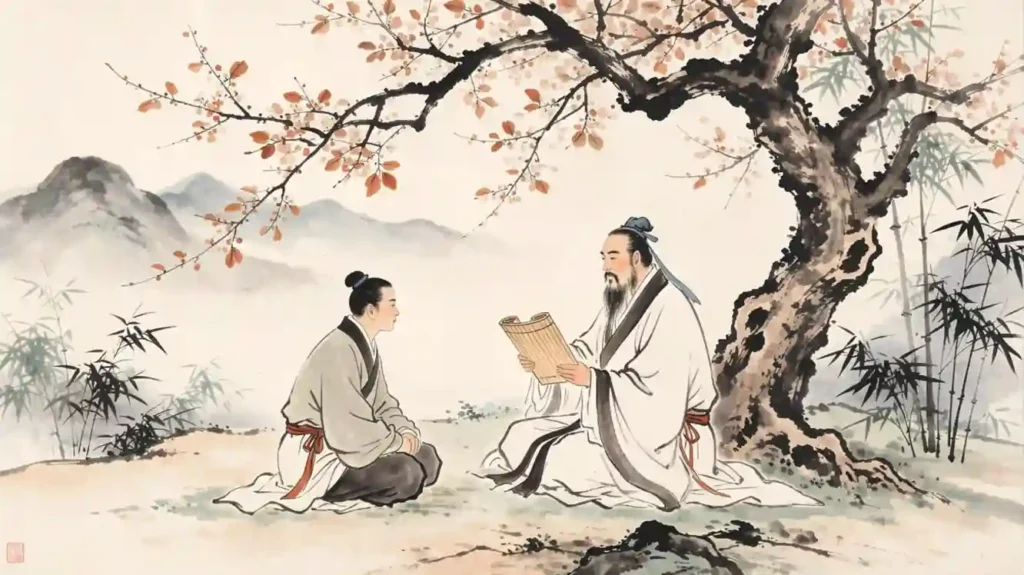
2. Deep Interpretation of Analects Chapter 1.7: Xian Xian Yi Se
The first phrase Xian Xian Yi Se sets the overall tone of the whole sentence. Grammatically, the first “Xian” is a verb, which means to respect and honor. The second “Xian” is a noun, referring to virtuous and wise people. “Yi Se” means to change one’s facial expression and posture to show solemn respect.
In short, Analects Chapter 1.7: Xian Xian Yi Se asks people to treat virtuous individuals with sincere reverence. This respect is not superficial politeness, but a change from the heart to the appearance. The virtuous people we need to respect include three groups in daily life: parents, mentors and friends. All the following behaviors are specific practices of respecting virtuous people.
Many old annotations misread “Yi Se” as abandoning worldly desires. This is a one-sided explanation. Combined with the full context, Zixia connects respecting virtuous people with daily interpersonal relationships. This view is widely recognized in academic research on The Analects. For authoritative original text and academic explanations, you can visit Chinese Text Project, a world-famous classical literature database (External Link, authoritative academic website).
Table of Contents
3. Serve Parents: Exert All Your Strength
“Serve parents and exert all your strength” is the first concrete virtue after respecting virtuous people. Filial piety is the foundation of Confucian morality. Zixia does not require blind obedience to parents, nor endless sacrifice of oneself.
“Exert all your strength” means doing everything within your ability to care for and accompany parents. When opinions differ from parents, we should maintain respect and gentle persuasion. If parents make mistakes, we can use wise ways to remind them instead of arguing fiercely or falling out.
Some traditional sayings require children to obey parents unconditionally, which is not the original idea of Confucianism. True filial piety combines respect, wisdom, and tolerance. It is a warm interaction between family members, not a rigid hierarchical constraint. This virtue is still valuable for modern families to maintain harmonious relationships.
4. Serve Mentors: Devote Your Whole Heart
The phrase “serve jun and devote your whole body” is the most distorted part in history. Many people take “jun” as emperors or monarchs, and interpret this sentence as absolute loyalty to rulers, even sacrificing life. This is a deliberate distortion by later feudal scholars.
In Zixia’s words, “jun” refers to noble mentors and spiritual guides, not imperial monarchs. A real mentor is a person who helps others open wisdom and pursue spiritual progress. Such people stay away from fame, wealth, lust, and selfish desires.
“Devote your whole body” means treating mentors with complete sincerity and reverence. We listen carefully to teachings, absorb wisdom, and correct our own shortcomings. It does not mean giving away property, personal freedom, or life. Mentors are like second parents, so we need to maintain a humble and devoted attitude during learning. This kind of teacher-student relationship focuses on spiritual inheritance, not unequal control.
5. Treat Friends: Be Honest and Trustworthy
“Be honest and trustworthy when making friends” is the basic principle of interpersonal communication. Trust is the bond that maintains friendship. Zixia’s explanation of trust has two layers of meaning.
The first layer is basic credit: keep promises and speak sincerely to ordinary friends. We should not lie or break promises easily. The second layer applies to friendships between virtuous people. Their communication focuses on ideals, beliefs, and spiritual pursuits. Here, “trust” also contains the meaning of sticking to common beliefs.
It is worth noting that being trustworthy does not mean unconditional compliance. If friends go astray, a true friend should remind and persuade them. Blind loyalty is not real trust. Balancing sincerity and principles makes friendship long-lasting and meaningful.
6. The True Meaning of “Although Called Unlearned, I Say He Is Learned”
Xian Xian Yi Se and Four Virtues in The Analects ends with a thought-provoking conclusion: “Although one is said to be unlearned, I definitely regard him as learned.” The two Chinese characters “Xue” have different usages here, which is the key to understanding the whole paragraph.
When used as nouns, the first “Xue” refers to formal book knowledge and academic learning. The second “Xue” stands for inner wisdom and moral attainment. A person who has never received formal schooling but practices all the above virtues owns real wisdom.
When used as verbs, the first “Xue” means attending school and learning textbooks. The second “Xue” means self-cultivation and moral practice. Even without systematic classroom learning, people who stick to good conduct are actually practicing the highest form of learning.
Many rural elders or ordinary laborers have no higher education, but they respect virtuous people, are filial to parents, respect teachers, and keep promises to friends. In Zixia’s eyes, these people are truly well-learned. Formal education is only a way of learning, while moral practice is the essence of learning.
7. Correct Historical Misinterpretation of the Three Cardinal Guides
We have to clarify a serious historical distortion. Later feudal scholars combined this paragraph with the so-called Three Cardinal Guides: ruler guides subject, father guides son, husband guides wife. They turned equal interpersonal relationships into absolute subordinate relationships.
They claimed that “serve jun and devote your whole body” required ministers to die for emperors unconditionally. They also regulated that children must obey parents in all life choices, and wives must obey husbands for life. These rules served imperial autocracy and completely deviated from Confucius and Zixia’s original ideas.
Confucianism advocates mutual respect between people, not one-sided obedience. Parents and children, mentors and students, friends are all equal in personality. The virtues Zixia talked about are voluntary moral pursuits, not rigid hierarchical rules. Restoring the original meaning helps us inherit traditional culture correctly.
8. Conclusion: Apply Ancient Virtues to Modern Life
Nowadays, people pursue various kinds of learning and skills, but many ignore moral cultivation. Zixia’s words remind us that the highest learning is to be a good person. Respecting virtuous people, being filial to parents, respecting mentors and keeping promises to friends are simple but powerful life lessons.
Xian Xian Yi Se and Four Virtues in The Analects is not an outdated old saying. It can guide us to deal with family, study, and social relationships. No matter how the times change, sincere morality and good conduct will always be the most valuable wealth of human beings.


