4 Core Confucius Governance Principles: Respect Work, Thrift, Benevolence & Rational Civil Service
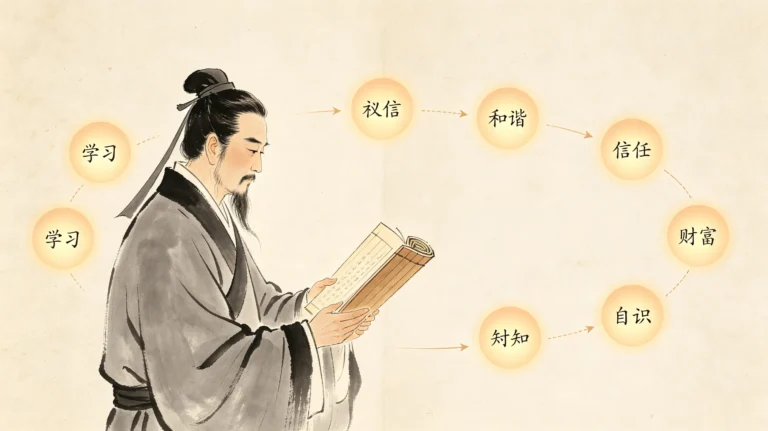
Confucius governance principles originate from The Analects, reflecting the ancient Chinese sage’s people-oriented governing philosophy. The classic quote “Govern a large state with reverence, trust, thrift, benevolence, and rational labor arrangement” has guided politicians and managers for thousands of years. This timeless saying was spoken by Confucius to define the standard for qualified rulers in the Spring and Autumn Period, an era filled with frequent wars and unstable national governance. Many ancient lords focused only on military expansion while ignoring people’s livelihood, which inspired Confucius to propose this gentle and human-centered governing model.
To dig deeper into Confucian classic texts, you can read What Is the True Meaning of Xue Er Shi Xi Zhi? to understand more.
This set of principles consists of four core modules. First, Respect Work and Keep Trust: Rulers must handle political affairs prudently and gain trust from civilians. Never make arbitrary decisions or perform perfunctory official duties. Second, Thrift in Resource Usage: Avoid unnecessary construction and waste of public resources. Government wealth should never be spent on luxurious palaces, ornamental gardens, or meaningless vanity projects.
Third, Benevolence for People: Put public interests in the first place and care about the living conditions of ordinary people. The upper class should abandon arrogant attitudes and treat every common citizen equally. Fourth, Rational Civil Service: Arrange labor reasonably without disturbing people’s normal production and rest. Especially in an agricultural society, seasonal farming must be respected to avoid disrupting crop cultivation and harvest cycles.
2. Common Questions & Professional Answers about Confucius Governance Principles
Many readers who study traditional Chinese culture have two typical questions about Confucius governance principles. This chapter gives accurate and easy-to-understand answers, combining historical background and modern social logic to eliminate public misunderstandings of ancient Confucian culture.
Q1: What does “A thousand chariots country” mean in ancient times?
A1: One chariot matches 4 horses, 3 soldiers on the carriage, 72 infantrymen, and 25 logistics staff. A thousand chariots mean 100,000 soldiers. Including the elderly, women, and children, the total population is about 500,000. It was a medium-to-large, powerful country in the Spring and Autumn Period. At that time, most tribes only had tens of thousands of people, so a 500,000-population country required extremely mature management systems. This is why Confucius put forward strict governance standards for such large states.
Q2: Is “Make people work on time” still valuable in modern society?
A2: Absolutely yes. This principle is not limited to ancient corvée. It applies to modern enterprise employment and government labor management. It prohibits overwork and arbitrary overtime, protecting employees’ rest rights. In modern industrial society, many enterprises blindly pursue production efficiency and ignore human physical limits. Excessive overtime leads to mental depression, low work efficiency, and even extreme social incidents. In this regard, this ancient principle still has strong practical guiding significance.
3. Tangible Benefits of Following Confucius Governance Principles
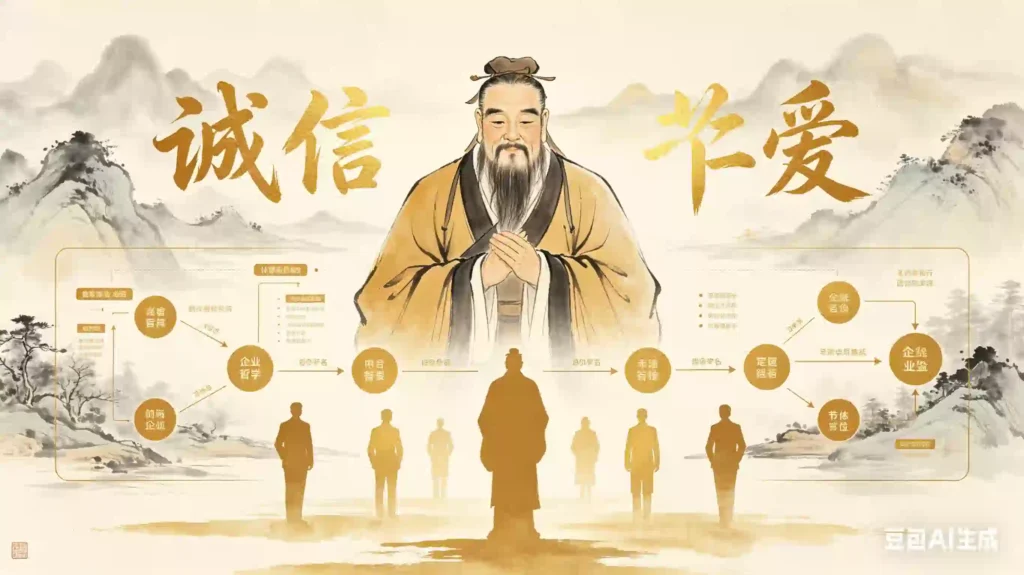
Whether for national governance or enterprise management, Confucius governance principles can bring stable and long-term benefits, summarized into three dimensions. Unlike radical and aggressive management methods, Confucius’ governance logic focuses on long-term stability, balancing resources, manpower, and public emotions to form a healthy internal circulation system.
| Benefit Dimension | Specific Performance |
| Public Trust | Superiors keep promises, civilians are loyal to the collective |
| Resource Saving | Reduce redundant construction and cut unnecessary costs |
| Humanistic Care | Avoid overwork and maintain physical and mental health of workers |
Reasonable resource allocation reduces financial pressure. Humanized labor management avoids employee burnout and social contradictions. Meanwhile, honesty-based governance builds a stable trust system. When managers respect their subordinates and rationally arrange working hours, employees will generate a higher sense of belonging. Low consumption and high credibility always become the core competitiveness of long-term developed organizations.
4. Step-by-Step Implementation Methods of Confucius Governance Principles
To apply these Confucius Governance Principles to modern management, follow four clear and operable steps. These steps abandon obscure ancient philosophical expressions and are completely optimized for modern enterprises and administrative institutions, making them simple, direct, and highly executable.
Step 1: Establish a rigorous work standard
Managers need to formulate clear work rules, handle every task prudently, and reject perfunctory working attitude. Keep promises to subordinates and the public to accumulate credibility. Every policy and regulation must be implemented strictly, and leaders should set an example to maintain consistent work standards. Credibility is the most intangible asset of management.
Step 2: Control unnecessary resource consumption
Cut redundant luxury construction and unnecessary expenditure. Allocate funds to public welfare and people’s livelihood, instead of vanity projects. For enterprises, it means reducing useless administrative expenses and excessive office decoration. For countries, it means controlling fiscal waste and investing resources in public infrastructure and people’s welfare.
Step 3: Build people-oriented management awareness
Pay attention to the living and working status of employees or civilians. Listen to public feedback and optimize management schemes in a timely. Managers should regularly collect employee suggestions, set up convenient feedback channels, and avoid rigid and one-way management modes. Humanization is the core of sustainable management.
Step 4: Make a scientific working time arrangement
Set fixed working hours, prohibit blind overtime, and reserve sufficient rest time for workers to balance work and life. Every worker needs time for relaxation, family companionship, and personal growth. Scientific working schedules can effectively relieve mental pressure and improve overall work output quality.
5. Practical Application Results & Cases Of Confucius Governance Principles
Many governments and modern enterprises have applied Confucius governance principles to daily management, achieving remarkable results. In Asia, especially in Chinese cultural circles, numerous institutions have verified the effectiveness of this ancient Eastern management philosophy.
Result 1: Stable social order and high public satisfaction
Regions that adhere to thrift and honest governance reduce corruption. People’s living pressure is relieved, and the relationship between managers and the public becomes harmonious. Transparent fiscal expenditure and people-centered policies significantly narrow the gap between the public and management groups.
Result 2: Low employee turnover in humanized enterprises
Enterprises that follow the “rational labor” rule cancel compulsory overtime. According to industrial data, employee happiness increases by 35%, and turnover rate drops significantly. Stable staffing reduces recruitment costs and improves team collaboration proficiency.
Result 3: Long-term sustainable development
Without excessive resource waste and human over-consumption, organizations maintain stable operational vitality and avoid short-term rapid decline. Many start-up companies pursue rapid expansion and overdraw manpower resources, eventually leading to collapse. In contrast, enterprises that adhere to Confucius’ steady development logic survive longer in fierce market competition.
6. Conclusion From Confucius Governance Principles
Confucius Governance Principles include reverence, trust, thrift, benevolence, and rational labor, which is not outdated ancient thought. It is a timeless management principle. Both national governors and enterprise managers can learn from these four core rules to realize benign and sustainable development. In the modern fast-paced industrial era, people often ignore human nature and blindly pursue benefits. Confucius governance principles remind modern managers that the essence of management is respecting people, cherishing resources, and maintaining long-term stability.
You can check more academic records about Confucius from Britannica: Biography of Confucius.