
Beyond Anger: 4 Secrets Why a True Junzi Never Lets the World Into Their Heart (Analects 1.1)
Beyond Anger: Why a True Junzi Never Lets the World Into Their Heart (Analects 1.1) is the ultimate destination of the spiritual journey outlined by Confucius. In the closing sentence of the Analects’ opening passage, we encounter a profound definition of the “Noble Character” or Junzi. Traditionally, this phrase—Ren bu zhi er bu yun—has been reduced to a simple moral lesson about not getting angry when your talents go unnoticed. However, according to the deep insights of our Master, this is a revolutionary teaching on cognitive dimensions and spiritual immunity. It is not about suppressed patience; it is about reaching a state of absolute inner transparency where the world’s friction simply ceases to exist.
1. Deconstructing the Concept: Beyond Anger and the Art of Non-Storage
To truly grasp the philosophy of Beyond Anger, we must perform a “linguistic surgery” on the original text. In ancient Chinese philosophy, words were multi-layered. The character Zhi (知), commonly translated as “to know” or “to recognize,” was phonetically and semantically interchangeable with Zhi (执), meaning attachment or clinging. When Confucius says Ren bu zhi, he is describing a person who has achieved a state of non-attachment. They are no longer “clinging” to the world’s perception or seeking external validation. Their worth is generated from within, making the “knowing” of others irrelevant.
The second revolutionary insight lies in the word Yun (愠). While standard dictionaries define it as “anger” or “resentment,” its deeper root is Yun (蕴), which means to store, to contain, or to accumulate. This changes everything. To “not be Yun” means to not store the world’s noise in your heart.
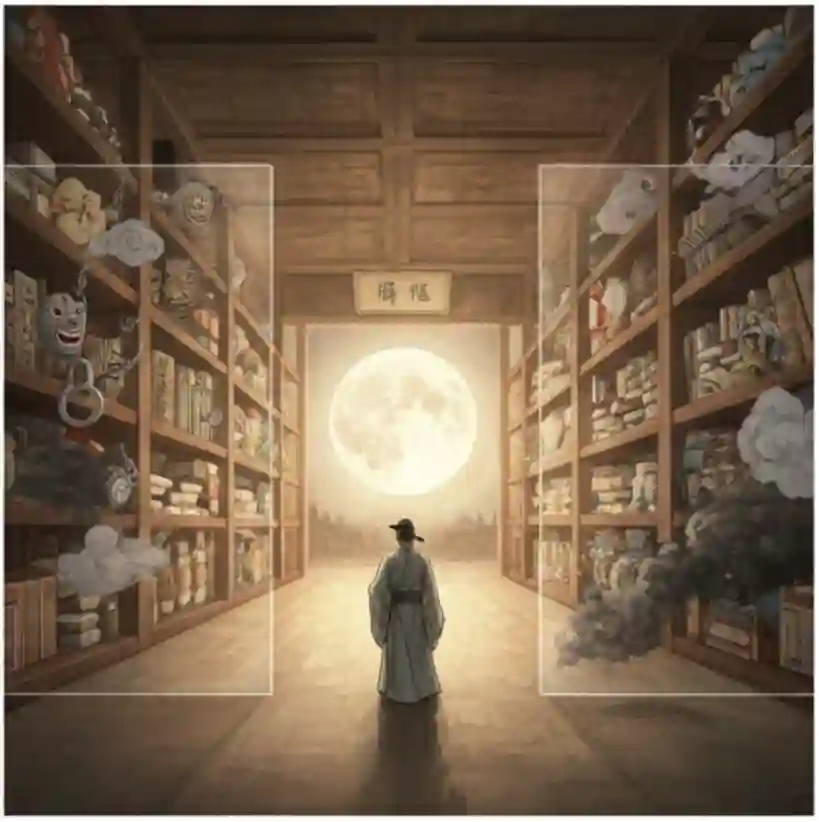
Imagine your mind as a digital warehouse. Most people spend their lives “downloading” and “storing” the grievances, criticisms, and social pressures they encounter. This storage creates a heavy spiritual burden, leading to what we modernly call stress and anxiety. A Junzi, however, has a “clean” warehouse. They perceive the world, but they do not “store” its negativity. They exist on a different cognitive plane where the opinions of others have no place to land. This is the true essence of the Beyond Anger mindset—a heart that is empty of worldly clutter but full of divine wisdom.
2. Two Critical Questions: The Dimensional Gap Between Junzi and Xiaoren
To master the Beyond Anger state, we must address two common misunderstandings regarding the hierarchy of awareness in the Analects.
Q1: Is the distinction between a Junzi and a Xiaoren an insult?
In modern culture, the term Xiaoren (小人) is often used as a derogatory label for a “villain.” However, our Master clarifies that Confucius was not being judgmental. A Xiaoren is simply an “ordinary person” or a “small self” whose vision is limited to the immediate, the material, and the ego. They are like people who have never seen the ocean; you cannot blame them for not understanding its depth. A Junzi is someone who has “awakened” (Xue) and “realized” (Xi) the truth. The distinction is about the breadth of vision, not moral condemnation.
Q2: Why is the “Great Wall” analogy so vital to understanding non-attachment?
The Master gives a powerful example: If you describe the majesty of the Great Wall to someone who has never seen it, they will likely remain indifferent or even skeptical. Should you be angry? No. Their lack of understanding is a natural result of their limited experience. A Junzi understands that most “red dust” conflicts arise because people are operating on different cognitive frequencies. When you realize that someone’s criticism is just a reflection of their current “dimension,” you naturally move Beyond Anger. You don’t forgive them out of moral superiority; you simply don’t “store” their words because they are factually irrelevant to your reality.
3. The Practical Benefits of the “Junzi” Frequency
Living a life Beyond Anger: Why a True Junzi Never Lets the World Into Their Heart (Analects 1.1) provides a level of spiritual and psychological freedom that is rare in today’s hyper-connected world.
- Absolute Emotional Autonomy: When you stop “storing” the opinions of others, you regain control over your internal state. Your happiness is no longer a “variable” controlled by external praise or blame.
- Energy Optimization: Storing resentment and attachment takes immense mental energy. By practicing “non-storage” (Bu Yun), you preserve your vital energy for higher purposes, such as creativity, service, and further spiritual evolution.
- The Power of “No”: As seen in the Master’s example of declining a “profitable business project,” a Junzi can say “no” with total peace. Because they are not attached to worldly gain, they can make decisions based on their “Dao” (Path) rather than social pressure.
- Clarity and Leadership: A leader who is Beyond Anger can see facts clearly without the distortion of ego or emotion. This aligns with the highest global standards of leadership, much like how the International Organization for Standardization (ISO) ensures excellence in organizational systems.
| State of Being | Cognitive Mode | Emotional Result |
| Xiaoren (Ordinary) | Attached and Storing | Resentment, Anxiety, Reactivity |
| Junzi (Noble) | Detached and Non-Storing | Peace, Clarity, “Zen Joy” |
4. How to Reach the Junzi State: A 4-Step Spiritual Roadmap
To achieve the state of Beyond Anger, one must follow the complete “1.1 System” designed by Confucius. You cannot simply “decide” to be a Junzi; you must cultivate it through specific stages.
Step 1: The “Xue” Phase (Self-Correction)
Everything starts with Xue (学), which we have redefined as the correction of one’s life. This isn’t book learning; it’s the refinement of how you eat, how you live, and how you act. As the Master notes, “eating without seeking fullness” and “dwelling without seeking comfort” are the first steps toward becoming a Junzi. You must first master your physical desires to build the strength for spiritual detachment.
Step 2: The “Shi Xi” Phase (Sudden Enlightenment)
Through consistent correction, you will experience Shi Xi—a sudden moment of “clicking” or “opening.” This is the “cool breeze” of wisdom. It is the moment you realize that you are more than your social role or your physical body. For more on this, revisit our guide on Xue Er Shi Xi Zhi.
Step 3: The “You Peng” Phase (Internal Realization)
Once the light is on, you “meet” your inner friend—your innate wisdom. This is the “Friend from Afar.” Because you have found this unshakable internal companion, the need for external validation vanishes. This is the foundation of the Beyond Anger state.
Step 4: Practicing “Bu Yun” (Non-Storage)
In your daily interactions, visualize your heart as a sieve rather than a bucket. Let the world’s opinions pass through you. If someone is being a “Xiaoren,” acknowledge their narrow vision as a fact of nature, and do not “store” it. This is how you finally “become” a Junzi.
5. Living the Result: The “TiHuGuanDing” (Enlightenment) Experience
What does it feel like to live the Beyond Anger life? The students in the Master’s lecture described it as “TiHuGuanDing” (a sense of pure light pouring into the head).
- Deeper Awareness: You realize that reading a book a thousand times is useless without a Master’s guidance. Once you see the “True Face” of the Analects, the world looks different.
- Transcendent Joy: You move from the temporary “Yue” (internal joy) to the constant “Le” (great bliss). You become like the Master, who is naturally disinterested in the “business of the red dust” because he is focused on the meaning of life.
- Ultimate Definition of Man: You finally understand that the purpose of being human is to evolve. As the Master concluded, the first section of the Analects defines the very meaning and value of life. Everything that follows—economics, culture, society—is just a tool for this grand spiritual cultivation.
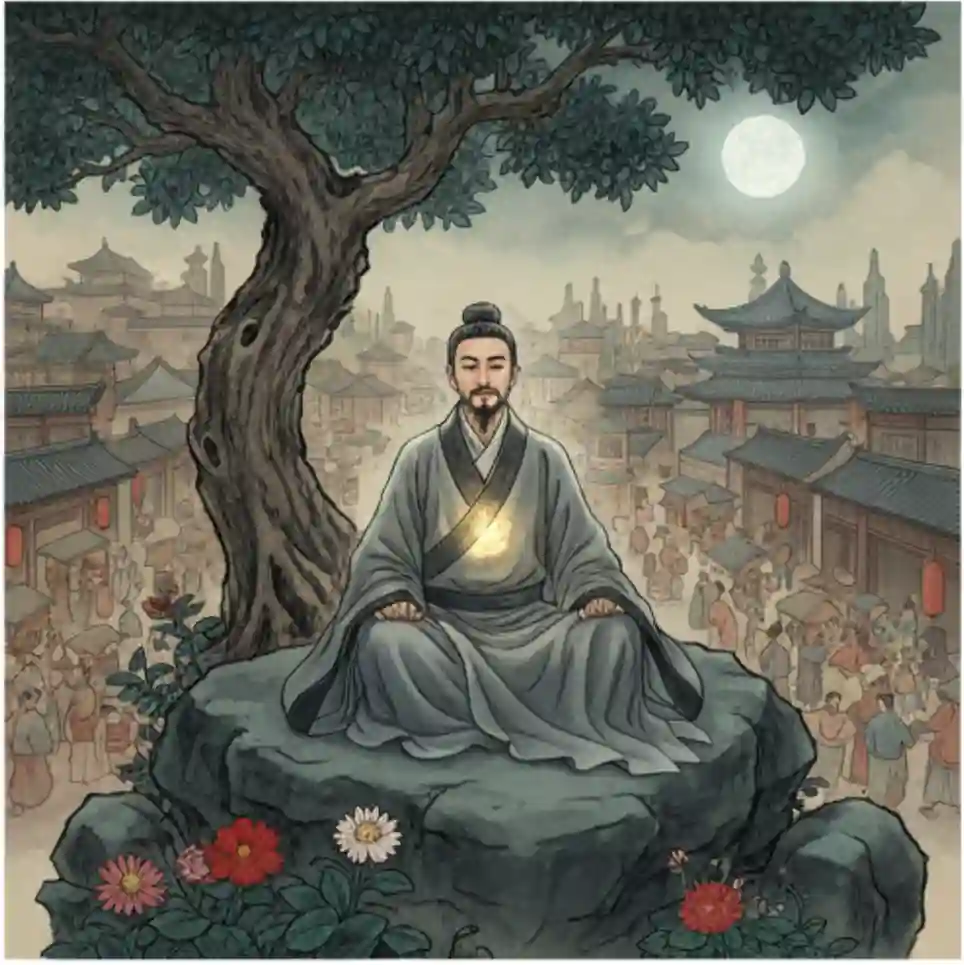
By following this path, you cease to be a “Xiaoren” wandering in the dark. You become a Junzi—a person of noble soul, clear mind, and a heart that stores nothing but the infinite light of wisdom.
